
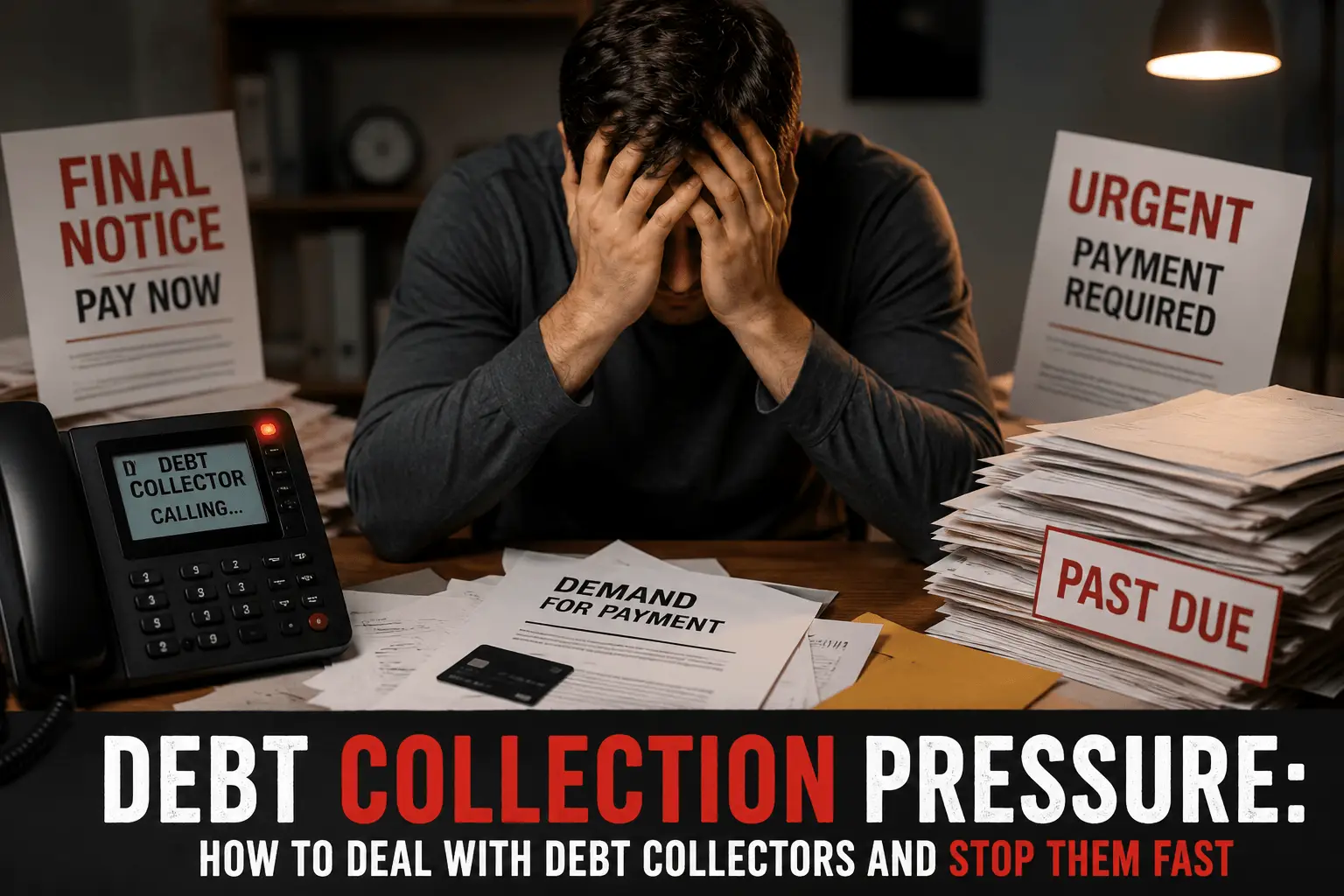
Stop Debt Collection Terror (eBook, Edition 2.0) – €14.95
Debt Collection Pressure: The Complete Guide to Dealing With Debt Collectors and Taking Back Control
Are debt collectors calling you day and night? Do threatening letters make you feel powerless? If you are dealing with debt collection pressure, you are not alone — and more importantly, you have more control than debt collectors want you to believe.
Key takeaways
- Ask for proof first: request written validation of the debt before you pay or admit anything.
- Put everything in writing: letters and emails create a record; phone calls favour the collector.
- Know the limits: collectors may not harass, threaten or mislead you, and in many countries their extra fees are capped by law.
Every year, millions of consumers deal with debt collection pressure from debt collectors. Some claims are legitimate. Many are not. Yet most people never question these claims — and that is exactly why debt collectors continue to succeed.
Official consumer authorities such as the Consumer Financial Protection Bureau and the European Commission confirm that consumers often have more rights than they realize when dealing with debt collectors.
If you want to understand how to deal with debt collectors, everything starts here.
What Is Debt Collection Pressure and Why Do So Many People Feel Powerless?
Debt collection pressure is the systematic use of urgency, fear, and psychological tactics by debt collectors to push consumers into making quick decisions — often before they verify whether a debt is valid, accurate, or even enforceable.
Most people facing debt collection pressure assume the situation is already decided. It is not.
Understanding how debt collectors operate is the first step in learning how to deal with debt collectors properly.
And once you understand that, you stop reacting — and start controlling the situation.
If you want a structured way to do that, this is exactly what STOP INCASSOTERROR was designed to help you achieve.
The Psychological Tactics Used by Debt Collectors
Debt collectors are trained to create discomfort. Their goal is simple: get you to act before you think.
They use language designed to increase debt collection pressure. Words like “immediate action required,” “final notice,” and “legal proceedings” are not random. They are designed to trigger urgency.
When urgency increases, questions disappear.
And when questions disappear, debt collectors win.
Fear, Urgency, and Constant Pressure From Debt Collectors
The constant phone calls. The repeated letters. The escalating tone.
This is not coincidence. This is how debt collectors maintain debt collection pressure.
Most people dealing with debt collectors feel they only have two options: pay immediately or ignore the situation. Both responses benefit the debt collectors.
Knowing how to deal with debt collectors means recognizing this pattern — and refusing to react to it.
Why Most Consumers Never Ask for Debt Validation
The most powerful question in dealing with debt collectors is also the most ignored:
“Can you prove this debt is mine and that the amount is correct?”
This is called debt validation — and it changes everything.
Official guidance from the Federal Trade Commission explains that consumers can request proof and challenge unclear claims from debt collectors.
Most people never ask for debt validation because they assume debt collectors are correct. That assumption is exactly what keeps debt collection pressure effective.
If you want to know exactly how to request debt validation correctly, this is one of the core strategies explained inside STOP INCASSOTERROR.
The Biggest Mistakes People Make When Dealing With Debt Collectors
Understanding how to deal with debt collectors starts by avoiding common mistakes.
Admitting a Debt Too Quickly to Debt Collectors
When you confirm a debt too quickly, you give debt collectors exactly what they want.
Debt collection pressure often leads people to respond emotionally. But confirming a debt without verification can completely change your position.
The smarter approach is simple: verify first, respond later.
Communicating by Phone Instead of in Writing With Debt Collectors
Debt collectors prefer phone calls because there is no record.
If you are serious about stopping debt collectors, you must move everything into writing. Written communication reduces debt collection pressure and creates clarity.
Without documentation, you rely on memory. With documentation, you rely on proof.
Ignoring Letters and Court Documents From Debt Collectors
Ignoring debt collectors may feel like relief, but it often creates bigger problems.
Debt collection pressure does not disappear when ignored. It simply continues without your input.
A structured written response puts you back in control.
Making Payments Without Debt Validation
Paying before requesting debt validation is one of the most common mistakes.
Debt collectors benefit when you skip verification.
Once a payment is made, your position changes. That is why debt validation should always come first.
Why Written Communication Changes Everything When Dealing With Debt Collectors
One simple shift can completely change your situation: moving all communication into writing.
Creating a Paper Trail Against Debt Collectors
Written communication forces debt collectors to clarify their claims.
Debt collection pressure becomes weaker when everything is documented.
A paper trail protects you and strengthens your position.
Why Verbal Agreements With Debt Collectors Can Become Dangerous
A verbal agreement can feel like progress. Until it isn’t.
Without written confirmation, you have no protection.
The Importance of Documentation When You Want to Stop Debt Collectors
Proof removes doubt.
And doubt is where debt collectors operate best.
Keeping Records When Dealing With Debt Collectors
Every letter, every email, every detail matters.
A structured file changes how you deal with debt collectors completely.
Debt Validation: The First Step to Stop Debt Collectors
Debt validation is one of the most powerful tools when dealing with debt collectors.
What Is Debt Validation?
Debt validation is the process of requesting proof from debt collectors.
Without debt validation, debt collection pressure remains unchallenged.
What Documents Should You Request From Debt Collectors?
When you request details, you force clarity.
And clarity changes everything.
Why Debt Collectors Often Lack Proper Documentation
Debt collectors often work with incomplete data.
Requesting proof exposes this.
What Happens When Debt Collectors Cannot Validate a Debt
When proof is missing, pressure loses its power.
How Fear Keeps People Stuck With Debt Collectors
Debt collection pressure is built on emotion.
Data access rights and transparency are also reinforced by official sources such as the European Commission GDPR overview.
Why Stress Leads to Poor Decisions With Debt Collectors
When stress increases, clarity decreases.
Debt collectors rely on this.
Emotional Pressure Used by Debt Collectors
Urgency creates reaction.
Understanding this creates control.
Taking Control From Debt Collectors Through Structure
Structure replaces emotion.
This is exactly what STOP INCASSOTERROR helps you implement.
Common Tactics Used by Debt Collectors
Repeated Calls and Pressure From Debt Collectors
Repetition is used to wear people down.
Threats and Pressure From Debt Collectors
Threats often sound stronger than they are.
Government-backed guidance like UK Government debt advice confirms that structured responses are key.
Payment Pressure Without Full Information
Always verify before paying.
Settlement Offers From Debt Collectors
Everything must be in writing.
What To Do Before Paying Debt Collectors
Before making any payment, pause.
Requesting Full Information From Debt Collectors
Details matter.
Reviewing Charges From Debt Collectors
Not everything is always correct.
Identifying Errors in Debt Collector Claims
Mistakes are more common than expected.
When to Seek Help With Debt Collectors
Recognizing complexity is part of control.
How STOP INCASSOTERROR Helps You Deal With Debt Collectors
STOP INCASSOTERROR gives you a structured system to deal with debt collectors.
Instead of reacting, you follow a process.
The Importance of Procedure Over Emotion When Dealing With Debt Collectors
Why Emotional Reactions Help Debt Collectors
Emotion benefits the collector.
Staying Professional With Debt Collectors
Clarity changes outcomes.
Building Control When Dealing With Debt Collectors
Control reduces pressure.
Financial Recovery Starts With Understanding Debt Collectors
Across regions, official institutions such as the Financial Conduct Authority emphasize transparency and documentation.
Understanding Your Position Against Debt Collectors
You have more control than it seems.
Learning How to Deal With Debt Collectors
Knowledge changes everything.
Protecting Yourself From Future Debt Collection Pressure
Preparation matters.
Rebuilding Confidence After Dealing With Debt Collectors
Control restores confidence.
Your options when a debt collector contacts you
| Option | When it fits | Watch out for |
|---|---|---|
| Request validation | You don’t recognise the debt, the amount or the collector. | Respect deadlines (in the US: within 30 days of the first notice). |
| Dispute in writing | The debt is wrong, already paid or too old. | Keep copies and send by registered mail or email. |
| Negotiate a payment plan | The debt is real and proven, but you can’t pay at once. | Get the agreement in writing before the first payment. |
| Ask them to stop calling | Calls are harassing or at unreasonable times. | This stops contact, not the debt itself. |
| Get independent help | Court papers arrive or the amounts are large. | Never miss a court deadline; free debt advice services exist in most countries. |
Frequently asked questions
Do I have to pay a debt collector right away?
No. First ask for written proof of the debt: who the original creditor is, the amount and how it was calculated. Paying or admitting the debt before you have that proof can make it harder to challenge later.
Can a debt collector call me every day?
Collectors may contact you, but they may not harass you. In the US the FDCPA bans calls at unusual times (generally before 8 a.m. or after 9 p.m.) and repeated calls meant to annoy. EU countries and the UK have similar rules against aggressive collection.
Can they add extra collection costs?
Only within the limits of the law in your country. In Belgium and the Netherlands, for example, collection costs on consumer debts are capped by law. Read our guide to collection costs in Belgium and the Netherlands.
What if I receive court papers?
Don’t ignore them. Court deadlines are strict, and missing one can lead to a default judgment. Respond in time and get independent advice if you are unsure.
Ready to Take Back Control From Debt Collectors?
If you are dealing with debt collection pressure right now, reacting is the worst move.
Understanding is the best move.
If you want to:
- deal with debt collectors correctly
- use debt validation effectively
- reduce debt collection pressure
- and stop debt collectors from controlling the situation
then STOP INCASSOTERROR gives you the exact system to do it.
This time, the next move is yours.
Stop Debt Collection Terror (eBook, Edition 2.0) – €14.95
Read next
 Free VPN: 7 Criteria to Avoid the Hidden RisksUpdated 28 Nov 2026
 Debt Collection: 6 Essential Steps to Protect YourselfUpdated 25 Nov 2026
 Infinite Banking Life Insurance: 7 Risks to Know FirstUpdated 23 Nov 2026
More guides from the Debt & Rights Desk
Get our free Subscription & Bill Cancellation Tracker
Sign up for our weekly email and download the tracker for free: list every subscription, see what it costs you per year, get a renewal calendar and ready-to-send cancellation letters. One short email a week with our latest guides. No spam; unsubscribe with one click.
[…] Read also our earlier guide: Debt Collection Pressure – How to Deal With Debt Collectors. […]
[…] of debt collection jobs. If you want to understand the strain behind those goals, my guide on debt collection pressure covers it. A companion piece explains how to deal with […]
[…] before you’ve had a chance to check the facts. If you’re facing that, this guide to collector pressure tactics can help you spot them, and this piece on settlement offers under pressure explains how to weigh a […]
[…] of undeliverable mail. Those records give you a paper trail, which matters if you’re under debt collection pressure and need to show where notices […]
[…] Settlement works the same way. Once a case is filed, any agreement should be documented, and it should be filed or reported to the court under local procedure. Otherwise the case can move forward even after you’ve shaken hands. If you’re weighing an offer, this guide on a debt collection pressure deal covers what to consider before agreeing. For background on the tactics collectors use, see my overview of debt collection pressure. […]