

Down camping socks are insulation for your tent and sleeping bag, not footwear for the trail. This honest guide covers how to read labels, why moisture decides warmth, and what to check before you spend your money.
Key Takeaways
- Read the fill percentage: A label that says only “down” tells you very little.
- Keep the insulation dry: Wet down clumps and loses its loft fast.
- Use them for camp: Save them for after you stop moving, not for wet trails.
Check the current offer of down camping socks
Down Camping Socks Are Camp Insulation, Not Hiking Socks
Down camping socks go by many names. You’ll see them listed as down booties, insulated camp socks, goose down socks, duck down socks, or insulated camp footwear. Whatever the label, they do one job: keep your feet warm inside a tent, sleeping bag, hut, or camp boot.
Don’t mistake them for hiking socks. Down loses its loft when it gets wet, and most down camping socks have no waterproof membrane or tough outsole. Wear them on a wet trail and your feet will be cold and soggy within minutes. Save them for after you stop moving.
Read the label before you buy. California rules require products labeled ‘down’ or ‘duck down’ to contain at least 75% down and plumules, and the percentage must appear on the label, according to the California Department of Consumer Affairs. A label that says only ‘down’ with no percentage should make you suspicious. Check the stated percentage before you compare prices.
Check the Rest Separately
‘Down’ tells you about insulation only. It says nothing about waterproofing, abrasion resistance, or whether the sole can handle gravel. I check four things separately: shell fabric, sole construction, water resistance, and care instructions. Thin nylon and a smooth sole work on a tent floor. A grippier sole with a tougher shell handles a short walk to the latrine.
Ignore Universal Warmth Claims
No official source sets a universal temperature rating for down camping socks. A brand might print ‘warm to freezing’ with no test behind it. Treat every warmth claim as specific to that product. If the maker publishes no tested rating, I assume the number is marketing.
Moisture Control Decides How Warm Your Camp Socks Stay
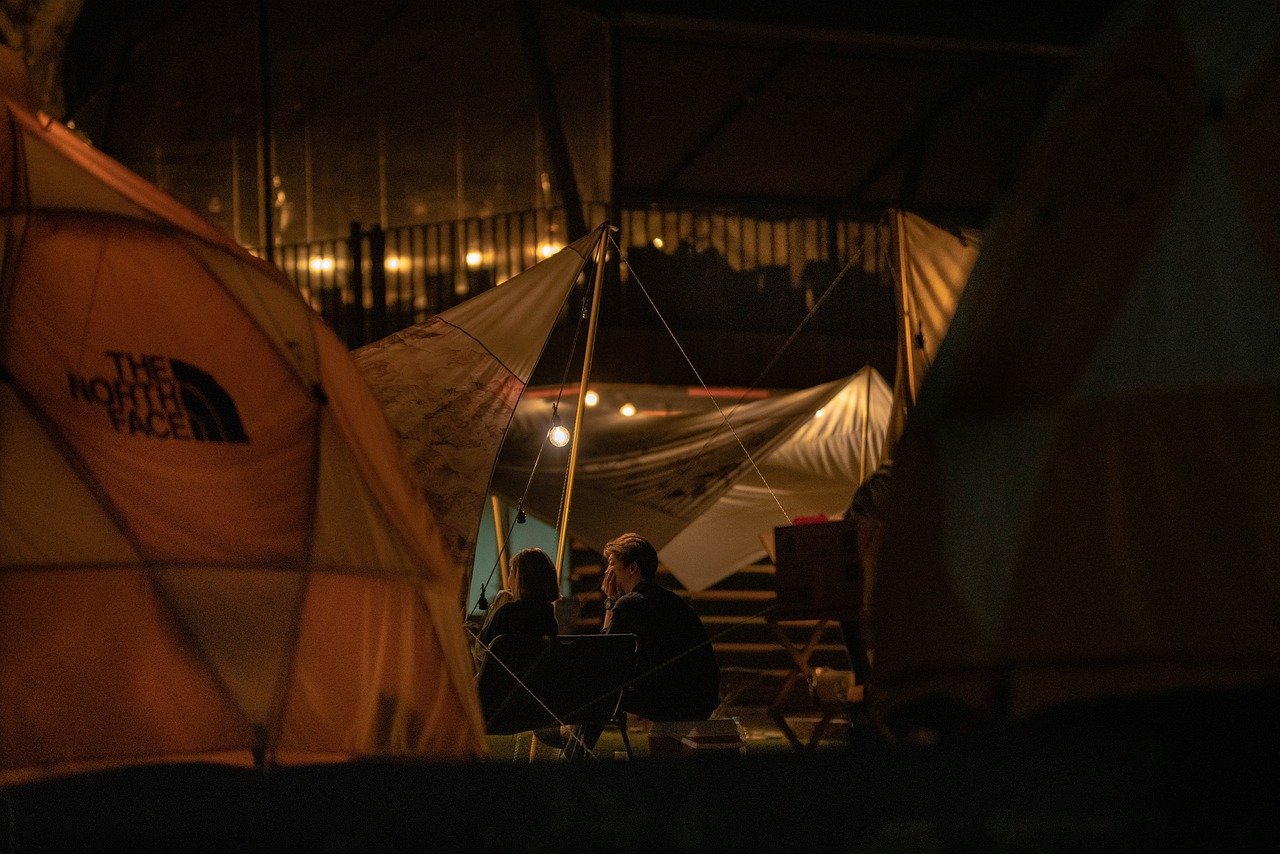
Warmth in down camping socks depends on four things: how much insulation you have, its loft, how well the shell blocks wind, and how snug the fit is. None of that matters if the insulation gets wet. Damp down clumps and loses loft, and that loss is the failure most campers never see coming.
Cotton is the main culprit. It absorbs moisture and holds it, so it stops insulating once it’s wet. The USGS and NPS both flag cotton as a poor choice for cold, wet conditions, so don’t use it as your main sock layer.
Wool, silk, and most synthetic fibers keep more of their insulating performance when damp than cotton does. Wool can soak up a lot of moisture itself, so it still needs drying time, airflow, and protection from rain or snow. A merino base sock keeps your skin drier, but it won’t stay dry on its own in a soggy tent.
Moisture comes from more places than you’d expect. Sweat from a long hike, wet ground, condensation on tent walls, melting snow from boots, and a damp tent floor all add up. A water-resistant shell handles small amounts of incidental moisture, but it doesn’t make a sock waterproof, so keep the down in the dry zone.
Choose insulation based on your conditions. Synthetic insulation suits repeated dampness, heavy condensation, and frequent washing. Down gives more warmth for its weight, so it fits dry trips best.
My setup pairs a wool or synthetic base sock with down camping socks reserved for dry conditions. FEMA advises carrying extra socks and a change of clothes, so I pack a dry spare pair in a sealed bag. Never climb into a damp sock and expect warmth. Dry it fully first.
Layering, Fit, and Cold-Injury Safety With Camp Socks
Cold-weather clothing works best in three layers. The contact layer moves moisture away from your skin, the insulating layer holds heat, and the outer layer blocks wind and wet. USGS guidance applies the same system to your feet. A wool or synthetic sock works as the contact layer, while down camp socks add insulation inside your sleeping bag or over a base sock.
Sizing up gives your toes room for these layers. Stack too many, though, and you restrict circulation, which leaves feet colder than before, as USGS notes. Try one half size up from your usual size, then check that your toes wiggle freely with both pairs on.
Tight clothing restricts blood flow and raises frostbite risk, according to the National Park Service. Look for bands at the ankle or calf, since they squeeze the same vessels your layers are meant to protect. Keep your down camp socks loose enough that the insulation keeps its loft, because compressed insulation loses warmth fast.
Cold, wet, numb, pale, or painful feet need action right away. Stop exposure, peel off wet layers, and rewarm gradually instead of rubbing or blasting them with heat. MedlinePlus advises seeking medical help for suspected frostbite or hypothermia, so do not wait to see if the symptoms fade.
Warm socks cannot fix wet footwear, poor shelter, or long exposure. Treat them as one part of the system, not a cure. If your feet stay cold despite good layers, change the setup before adding another pair.
Durability and Blister Limits of Down Camping Socks
Down camping socks earn their warmth from fill, not toughness. The word “down” says nothing about how long the shell will last. Before buying, I check four things: shell fabric denier, stitching, baffle construction, and sole reinforcement.

Higher denier usually means a thicker, tougher shell, though it adds weight. Reinforced heel and toe patches matter most, because those areas wear first. I also look at the cuff, which should stretch without fraying or digging into the leg.
California’s down labeling rules require accurate fiber-content disclosure, so the label should name both the fill and the shell. Next, I read the manufacturer’s intended use. A sleeping-only sock is not built for abrasive ground, wet vegetation, crampons, or long-distance walking.
I found no official source confirming that down camping socks prevent blisters. Blister risk depends more on friction, moisture, shoe fit, seams, and bunching during prolonged walking. Extended walking can increase wear and moisture exposure in socks built for camp, so I treat them as stationary insulation.
Choose smooth seams and a fit that holds without squeezing. Wear dry socks, and address any hot spot early with a bandage or a change of sock. I check fit before the first step on trail, because a bunched sock creates a pressure point fast.
Before each trip, inspect stitching, exposed lining, and insulation compression. If the fill stays flat after shaking, the loft is gone and the warmth goes with it. I retire a pair at that point rather than trust it in the cold.
Budget Checklist for Buying Down Camping Socks
Start by deciding what you need your down camping socks for. Sleeping, camp wear, indoor lounging, and outdoor walking call for different designs, so a pair built for one use may disappoint in another. Pick the job first, then compare listings.
Check the insulation type and the stated down percentage. Then look at the shell’s water resistance, breathability, sole design, cuff construction, and care label. A sole that grips a wet tent floor and a cuff that stays up matter more than color or branding.
Choose a fit with enough toe room for your base sock. Tight socks compress insulation and can restrict circulation, which defeats the purpose. If you wear thick wool underneath, size up.
In cold conditions, wear wool or synthetic base socks under the down layer, not cotton. Cotton holds moisture against your skin. Carry a dry spare pair, and keep insulated socks off wet ground and away from tent condensation.
Treat warmth claims as specific to each product. Unless the maker publishes a tested temperature rating, a “warm” label is only a claim. No official source verifies ranked lists or current prices, and a lower price proves nothing about warmth in either direction.
Check discounts on the manufacturer’s official store or an authorized retailer on the day you buy, because prices change. For a budget system, pair a wool or synthetic base sock with one dry insulated camp layer. That setup covers hiking and sleeping better than one product trying to do both.
Caring for Your Socks
Follow the label first. Use a washing method suited to down, then dry thoroughly to restore loft, because damp down clumps and loses warmth. Store down socks dry and loose, not compressed for long periods.
Check the current offer of down camping socks
Sources: osha.gov/emergency-preparedness/guides/cold-stress, home.nps.gov/articles/winterweather.htm/index.htm, pubs.usgs.gov/of/1989/0415/report.pdf, esc.gov/MONRONeYnews/archive/Vol_8/CZ/02_2.asp.
Disclosure: some links in this article are affiliate links. If you buy through them, I may earn a small commission at no extra cost to you. As an Amazon Associate I earn from qualifying purchases.
Read next
 best AI tools small business: 5 Proven Picks ComparedUpdated 25 Nov 2026
 Vertical Charcoal Smoker: 5 Honest Buying Tips for 2026Updated 25 Nov 2026
 Pilates Core Bed 2026: 7 Honest Buying ChecksUpdated 25 Nov 2026
More guides from the Business & Tools Desk
Get our free Subscription & Bill Cancellation Tracker
Sign up for our weekly email and download the tracker for free: list every subscription, see what it costs you per year, get a renewal calendar and ready-to-send cancellation letters. One short email a week with our latest guides. No spam; unsubscribe with one click.