How Non-US Residents Can Build a Real “Be Your Own Bank” System — and What Must Be in Place Before a U.S. Whole Life Policy Is Even Possible
Nelson Nash’s Version of “Being Your Own Bank” Is Not Just “Get Insurance”
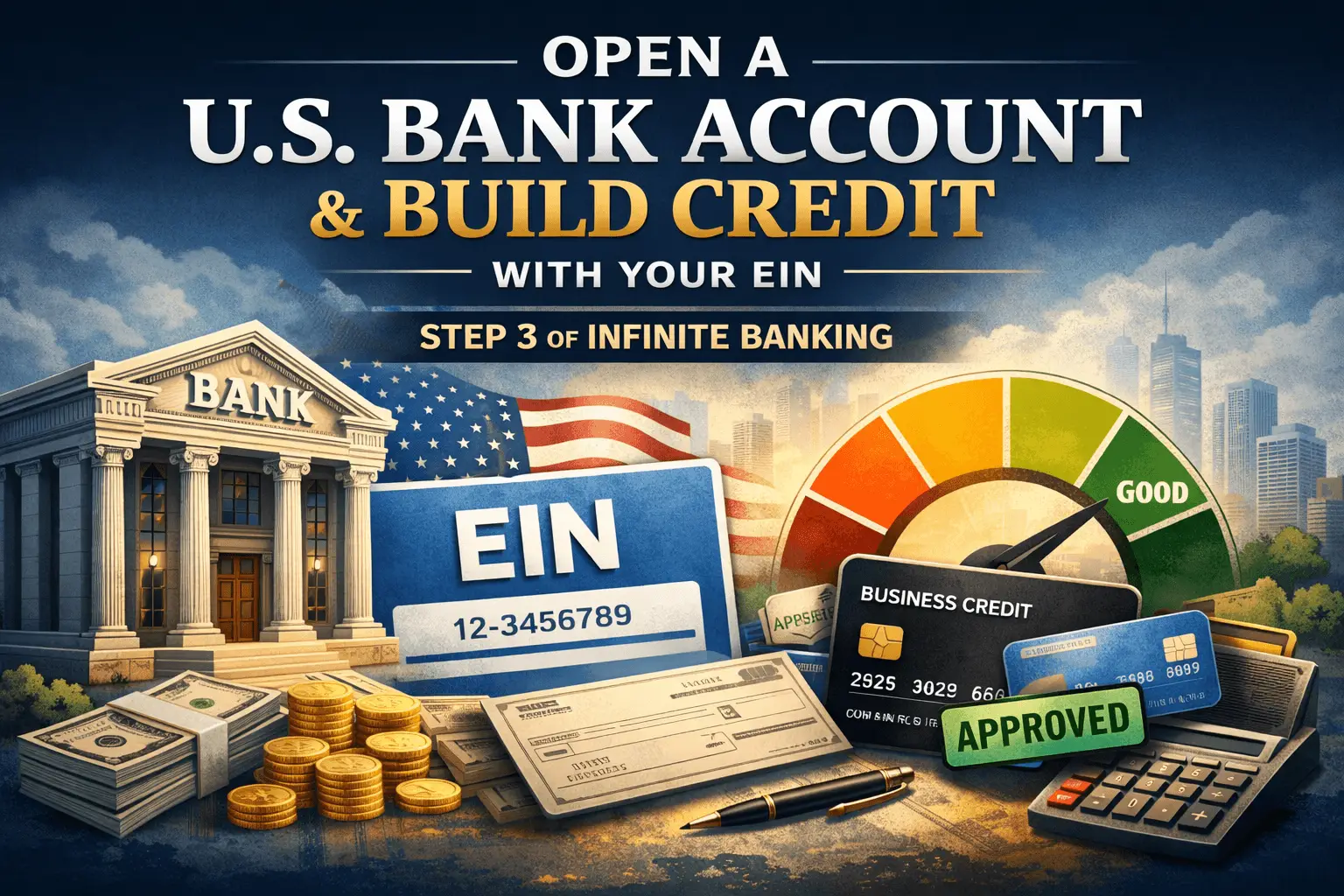
be your own bank non us resident is the final step in building a real private banking system using the U.S. financial structure.
Nelson Nash did not present the idea of becoming your own banker as a shortcut, a slogan, or a matter of buying any life insurance policy and calling it Infinite Banking. In the original spirit of the concept, the foundation is much narrower and much more disciplined than many people assume. The strategy is rooted in properly structured, dividend-paying whole life insurance designed to create a private financing system over time. That distinction is essential for anyone who wants to approach this subject seriously, and it becomes even more important for someone who is not a U.S. resident.
For a non-U.S. resident, the issue is not simply choosing a policy. The real issue is whether you can build the legal, banking, compliance, advisory, and underwriting foundation that makes such a policy realistically available to you in the first place. That is where many articles become weak. They jump straight to the product without explaining the infrastructure that must exist before the product even becomes relevant.
If you live outside the United States, the path to building a true “be your own bank” system is more demanding. It requires a serious sequence. You need to be able to show structure, consistency, credibility, and legitimate ties that make your application make sense from the perspective of a U.S. carrier and its compliance departments. In other words, the real work begins before the insurance application is ever submitted.
The be your own bank non us resident strategy is designed to give you full control over your financial system.
Watch Nelson Nash, the creator of the Infinite Banking Concept, explain how the system truly works and why becoming your own banker is about control over your financial life.
The Sequence Has to Be Right or the Entire Structure Becomes Weaker
Anyone who wants to be taken seriously in the world of Infinite Banking should avoid presenting the process as if it were some magical shortcut to private wealth. The structure only becomes strong when the sequence is disciplined.
For a non-U.S. resident, that usually means first establishing a legitimate U.S. presence, then obtaining the EIN properly, then creating a compliant U.S. banking relationship or financial operating stack, then building a visible business identity and credit profile, and only after that working with a specialist who understands foreign-national life insurance underwriting and participating whole life policy design.
This order matters because the insurance conversation becomes much stronger when you already look organized. A foreign applicant who has no U.S. address, no EIN, no banking relationship, no operational footprint, no advisory team, and no evidence of U.S. ties does not look like a serious long-term client. A foreign applicant who already has a documented administrative presence, U.S. financial operations, a business or investment footprint, and a coordinated cross-border team presents a very different case.
That difference affects trust. It affects underwriting. It affects compliance. And in many cases, it affects whether a specialist will even consider the case worth pursuing.
What Has to Be in Place Before You Can Seriously Pursue the Policy
A Real U.S. Presence
The first thing a non-U.S. resident needs is not a policy illustration. It is a real administrative footprint inside the United States.
This is why the earlier steps matter so much. A U.S. mailing address is not the policy, but it is part of the credibility layer. It gives you a real point of contact within the United States and helps keep your banking, entity, and tax paperwork aligned. It reduces friction. It gives your structure consistency. It helps present your file as something that belongs to a legitimate financial setup rather than to a disconnected collection of documents.
The EIN serves a similar purpose. It is not just a number to satisfy a form. It is the identifier that allows the U.S. system to recognize your structure. Without it, you remain outside the operational logic of American finance. With it, your file begins to look real to banks, service providers, and, eventually, advisers and carriers evaluating whether your case can move forward.
This step may sound administrative, but serious private banking structures are built on administration done properly. A reader who does not understand that is still looking for shortcuts. A reader who does understand it is already thinking like an operator.

A Bank Account That Lets You Actually Operate
Once the EIN is in place, the next issue is no longer theoretical wealth strategy. The issue becomes whether you can actually function in dollars and operate in a way that makes your future structure viable.
A U.S.-oriented banking stack is the operating layer beneath the future policy strategy. If you cannot receive funds, move funds, manage cash in U.S. dollars, or maintain consistent financial records, then you are not yet building a private banking system. You are still assembling pieces.
This is why opening the right kind of account matters so much for non-U.S. residents. It is one thing to have an EIN and a mailing address. It is another thing to be able to manage a functioning U.S. financial identity. Once that account exists, you can start building the transactional history and operational legitimacy that make the next steps stronger.
Many non-U.S. residents discover that opening the bank account is one of the most frustrating parts of the process. There are compliance checks, KYC requirements, and documentation hurdles that do not exist in the same way for domestic applicants. That is precisely why this step should be treated seriously and not as a side detail.
When this layer is done correctly, everything becomes easier afterward. You can hold funds in dollars. You can create clearer records. You can support future applications with evidence of actual U.S.-connected financial activity. And most importantly, you move from having a paper structure to having a living, operating structure.
Understanding the be your own bank non us resident concept is essential if you want to build long-term wealth.
A Business Identity That Can Be Evaluated by the Market
After banking comes visibility.
This is where many readers begin to understand that becoming your own banker is not about a single product. It is about building layers of financial recognizability. The business must become legible to the market. It must be something that can be evaluated, measured, and trusted.
That is why business identity tools matter. A visible business profile helps institutions understand that they are dealing with something established rather than improvised. It provides another layer of order. It supports onboarding, recordkeeping, and financial evaluation.
This point is important because serious readers should never be sold the fantasy that everything in the future will be funded entirely by day-one policy loans. That is not how disciplined private banking structures are built. The better framing is that you are creating multiple layers of optionality: administrative presence, cash flow rails, a visible business identity, operational records, and then, only after the foundation is strong enough, a properly designed policy serving as the long-term capital reservoir.
When the article explains this clearly, it sounds more credible to readers who already understand finance. It also separates a serious framework from an overly simplified sales pitch.
Credit That Supports Flexibility Instead of Replacing Discipline
Business credit is not the same as Infinite Banking, but it can make the overall structure much stronger.
This is an important nuance. Credit is not a substitute for the policy. It is not the heart of the strategy. But it can support the system while the policy is still young and while cash value is still building over time. It can provide flexibility, liquidity support, and operational resilience in the earlier stages of the journey.
That is why it makes sense to discuss credit before the policy and not only after it. If your reader is building a real structure, then credit belongs in the conversation as one of the supporting layers. It should never replace discipline. It should never become an excuse to overextend. But when used correctly, it can help create room while the deeper capital structure matures.
This also improves the tone of the article. It shows readers that the path to becoming your own banker is not about pretending one tool solves everything. It is about understanding how multiple layers work together and how each one serves a different purpose.
The People You Actually Need to Work With
A Foreign-National Life Insurance Specialist, Not a Generic Agent
This is one of the most important distinctions in the entire article.
Many superficial articles say something vague like “talk to an insurance agent.” That is not enough. If you are outside the United States, you do not need a generic life insurance salesperson. You need a licensed U.S. life insurance professional who already works with foreign nationals and non-resident cases and who understands how underwriting works when the applicant lives abroad.
That specialist should understand which carriers are actually open to foreign-national whole life cases, which countries of residence are acceptable, whether exams can be completed abroad or only in the United States, what level of U.S. ties strengthens a case, whether policy delivery is restricted to certain jurisdictions, and what kind of compliance documentation will likely be requested.
If the person you are speaking to cannot answer those questions clearly, then the case is still too early or the adviser is not the right fit. That is not a small issue. It is a structural issue.
This section of the article is where you earn authority instead of simply traffic. If you explain that the policy is not something to be “bought online like software,” but something that must be placed through a licensed specialist who understands foreign-national underwriting and participating whole life design, you immediately sound more credible than the many simplified IBC posts floating around online.
A Cross-Border Tax Adviser or CPA
A serious article for non-U.S. residents cannot skip tax complexity.
That does not mean the article needs to give tax advice. It should not. But it must tell the truth. Even if a U.S. carrier is willing to issue the policy, the treatment of that policy in your home country may be very different from its treatment in the United States. That can affect reporting, taxation of cash value, treatment of loans, surrender values, ownership structures, and other practical issues.
This means one of the people a non-U.S. resident needs before application is a tax adviser who understands cross-border treatment and can evaluate how the policy interacts with the legal and tax environment of the country where the client actually lives.
That point strengthens the article rather than weakening it. Serious readers trust content that admits complexity. They become more confident when they see that the article is not trying to oversell simplicity where real complexity exists.
An Attorney for Ownership, Beneficiary, and Succession Design
The insurance contract is only one part of the architecture.
Ownership, beneficiary designations, business use, succession planning, and asset separation are separate issues. A proper structure does not exist only inside the policy itself. It exists in the way the policy fits into the broader legal and financial framework around it.
That is why the right attorney matters. Not simply someone who files basic formation paperwork, but someone who can help coordinate the policy with the business structure, the estate plan, and any cross-border legal considerations that may affect ownership and succession.
This becomes even more important if the eventual owner of the policy is not the individual directly, but a trust or business-related structure. In that case, the article should make clear that the last step is not “get a quote.” The last step is “finish the architecture.”
That kind of language matters because it signals that the platform takes structure seriously.
What Carriers and Programs Look More Realistic for a Non-Resident
A serious answer to the question “Who do I need to work with?” is not a giant list of carrier names with fake certainty. The more honest answer is that the non-U.S. resident needs to work with a practitioner and carrier platform that already handles foreign-national underwriting.
That is the real standard.
What matters is not whether a random company name appears in a blog post. What matters is whether the practitioner and the carrier platform have experience with cross-border cases, tolerance for foreign-national underwriting, clear internal rules about residency, policy delivery, medical requirements, source-of-funds review, and the kind of compliance profile your case presents.
This is how the article should frame the issue if it wants to remain credible. The point is not to promise a specific carrier. The point is to describe the type of platform and professional relationship that makes the case realistic.
That approach is harder to attack because it is grounded in process rather than hype.
What the Insurance Company Is Likely to Look For Before Saying Yes
Evidence That Your U.S. Ties Are Real
One of the biggest mistakes non-U.S. residents can make is assuming that the game is simply about filling in forms.
It is not.
The real issue is substance. A carrier evaluating a non-resident case wants to understand whether the applicant has durable, credible ties that make the case sensible from a compliance and underwriting perspective. Those ties may come in different forms. They may be financial, business-related, family-based, or property-based. But the broader point is always the same: the case must make sense.
This should shape how the article is written. A non-U.S. resident who wants an IBC-style policy should understand that the path is not about shortcuts. It is about building a case that looks coherent, long-term, and credible.
That is how the article stands out. It teaches the reader that the real issue is not paperwork alone. The real issue is whether the applicant has built enough substance around the case.
Country Risk, Travel, and Compliance
Another issue readers need to understand is that availability is not determined only by interest or wealth. Country of residence, travel patterns, compliance exposure, and broader risk considerations can all matter.
This is another place where tone is critical. The article should not sound like it is helping people “get around” anything. It should sound like it is helping them understand how legitimate underwriting works and what legitimate compliance review is likely to require.
That kind of tone protects the authority of the platform. It signals professionalism instead of gimmickry.
A Policy Design That Matches IBC Rather Than a Generic Sales Pitch
Even when the carrier is realistic and the case is viable, the final risk is poor policy design.
This is where many otherwise serious readers can still go wrong. Not every permanent policy supports the Infinite Banking framework. Not every design will create the liquidity profile, long-term behavior, and financing function associated with the original concept.
If a reader wants to do this in a way that stays faithful to Nelson Nash’s framing, then the practitioner must be able to explain policy design inside that framework. The conversation needs to revolve around participating whole life, premium structure, cash value behavior, policy loan mechanics, rider design, and the types of choices that either strengthen or weaken the banking function.
The article does not need to become an actuarial textbook. But it does need to make one thing unmistakably clear: not every permanent policy is an Infinite Banking policy.
That sentence alone improves the seriousness of the piece.
The Last Practical Layer Before Application
Clean Documentation
Before a foreign-national life insurance specialist submits anything, the file should be clean.
The address records, entity records, EIN records, banking records, identification documents, and any proof of U.S. ties should all tell one coherent story. This sounds simple, but it matters more than many readers realize. Financial institutions and carriers are not only evaluating whether the applicant qualifies. They are also evaluating whether the case is organized and credible.
A file that feels improvised tends to create friction. A file that feels consistent tends to move more smoothly.
This is one of those practical details that serious platforms explain and careless platforms ignore.
A Funding Story That Makes Sense
No serious adviser or carrier wants a vague answer to the question of where the premiums will come from.
If the eventual premium flow is meant to come from business income, retained earnings, cash reserves, investment income, or some other source, that should be understood in advance. This is not only a compliance issue. It is also a strategic issue.
A properly designed private banking policy only works when the premium commitment is sustainable. Buying the right policy with the wrong funding discipline is still the wrong move.
That message belongs in the article because it reflects the real spirit of a disciplined banking framework. It also helps filter out readers who are looking for hype instead of structure.
The Patience to Let the System Become What It Is Meant to Be
The final thing a non-resident needs before applying is the right expectation.
The original “be your own bank” framework was never meant to be a get-rich-next-quarter system. It is a long-range financing system. It is designed to become stronger over time, not to serve as a speculative shortcut.
That tone helps the brand. When the article says clearly that the policy is the capital engine of a private financing system rather than a shortcut around discipline, it attracts better readers, better conversations, and better long-term positioning.
It also makes the platform sound far more trustworthy.
What to Do Now If You Are a Non-U.S. Resident and Want the Real Thing
If your goal is to become your own banker in the serious Nelson Nash sense, then your task is not to chase random illustrations from generic agents.
Your task is to finish the infrastructure and build the right team.
That means confirming your U.S. administrative footprint, finalizing your EIN properly, building or strengthening your U.S. banking stack, creating business visibility through your business identity profile, organizing credit visibility, and then approaching a foreign-national life insurance specialist who works with participating whole life and understands non-resident underwriting.
It also means having tax and legal counsel in place before the policy is placed, not after.
That is the disciplined path. That is the path that looks credible. And that is the path that gives a non-U.S. resident the strongest chance of building a real “be your own bank” system rather than merely talking about one.
Final Thought
A serious article on this topic should achieve three things at the same time.
It should stay faithful to the original Nelson Nash logic of Infinite Banking. It should avoid making reckless promises to non-U.S. residents. And it should explain the process in a way that builds trust instead of hype.
That is how you become respected in the world of being your own bank.
That is also how you build something real.