

Français · Nederlands · Português · Italiano · Deutsch
In this systeme.io review, I look at who the platform suits, what the free plan covers, and where hidden costs show up. Short version: it can replace several tools for solo creators, but plan caps and processor fees need checking before you commit.
Key Takeaways
- Free plan: It never expires and allows up to 2,000 contacts, with unlimited email sending.
- Paid plans: They start at $17 per month, but funnels, automations, and students all carry caps.
- Hidden costs: Systeme.io charges 0% transaction fees, but your payment processor still takes its cut.
Check the current offer of Systeme.io
systeme.io review verdict: who it suits best
Systeme.io suits people who want fewer logins and a low-cost way to test an online business. It bundles sales funnels, email marketing, websites, blogs, online courses, memberships, affiliate programs, and marketing automation into one account. If you sell one course or coach clients, that bundle can replace several separate subscriptions.
The strongest case for it is the free plan. It never expires, it allows up to 2,000 contacts, and it includes unlimited email sending. You can build a funnel, capture a first list, and sell a small product before spending anything. That gives you real buyer data, which beats guessing.
Who gets the most from it
Creators, coaches, course sellers, and affiliates benefit most. Each one needs a landing page, an email list, and a checkout, and this platform covers all three. Small online businesses that want one dashboard instead of five tools will also find it practical. If you’re comparing AI helpers alongside it, my best AI tools for small business guide covers writing and design options.
Where it falls short
The main limit is plan-specific caps on contacts, funnels, automation rules, campaigns, and students. These limits change by plan, so check the paid tiers against your expected list size and number of offers before upgrading. Systeme.io states a 0% transaction fee policy, but your payment processor may still charge its own fees. Add those costs, plus a custom domain and hosting if you need them. My Hostinger review covers one hosting option to price in.
My advice is to run the free plan on one offer first. Track how many visitors join your list and how many buy. Upgrade only when one funnel produces steady sales and you hit a cap you can’t work around.
systeme.io review pricing: free plan limits and $17 paid plans
In this systeme.io review, the free plan comes first. The official pricing page lists it at $0 per month. Its official comparison page calls it permanent and says no credit card is required, so you can test this free sales funnel builder with zero risk.
Paid plans start at $17 per month. Prices and limits can change, though, so I check the live pricing page before I trust any number. Verify the figures before you buy, because they may shift.
What the free plan caps
The free plan supports up to 2,000 contacts, 3 sales funnels, 1 blog, 1 course, 1 affiliate program, and 1 custom domain. A small list can grow a long way inside that limit. Three funnels give you room to test a lead magnet, a sales page, and an upsell at once. For domain setup, read my Hostinger review.
Some tools carry tighter caps. You get 1 automation rule, 1 email campaign, and a stated student limit of 500 on courses. One automation rule won’t carry a welcome sequence and a nurture sequence at once, so map your flow before you build. Compare more automation options in these AI tools for small business.
What every plan includes
All plans include unlimited email sending, unlimited sub-accounts, and 0% Systeme.io transaction fees. That last point means the platform takes no cut of your sales. Check your payment processor separately, since its fees still apply.
The free plan limits how much you use, not which tools you can access. You can build funnels, a course, and email flows without paying a cent. Track your contact count each month, so you upgrade on purpose rather than when the tool blocks you.
Core features: sales funnels, email automation and digital products
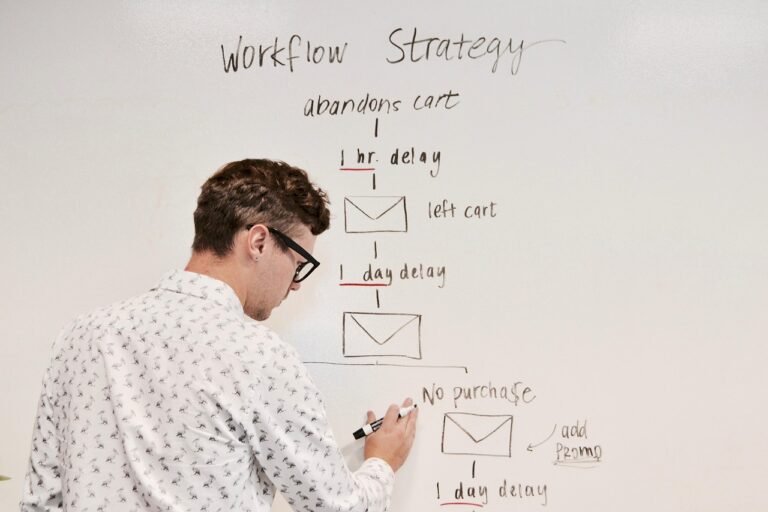
The sales funnel sits at the center of this systeme.io review, and it works as a chain of connected pages. A landing page attracts visitors, an opt-in page collects their email addresses, and an order form takes payment. Upsells and order bumps add extra products to the checkout, while coupon codes support short promotions.
Payments run through Stripe and PayPal integrations, so the funnel handles money from the first click to the final receipt. Each step covers one job: attracting visitors, capturing leads, presenting an offer, taking payment, and delivering the product. Mapping your offer to those five jobs before you build is the fastest way to spot gaps.
Email runs alongside the funnel. Contacts receive tags, join campaigns, and move through workflows driven by automation rules. A common setup tags subscribers at opt-in, runs a follow-up sequence, and excludes anyone who buys.
Delivering digital products inside the platform
Blogs, online courses, membership sites, file storage, and custom domains sit inside the same platform. Buyers can pay, then open a course or download a file without leaving your site. A single guide needs only file storage, while recurring content suits a membership site instead.
Official feature lists confirm these tools cover lead generation, digital-product sales, customer communication, and post-purchase delivery. If you also need separate hosting for a site beyond the funnel, read this Hostinger review before you decide.
Hidden costs: payment processor fees, domains and plan caps
Any honest systeme.io review should separate what the platform charges from what your processor charges. Systeme.io takes 0% transaction fees on payments accepted through Stripe or PayPal. Stripe, PayPal, your bank, card networks, currency converters and local taxes still take their share, and none of them appear as a Systeme.io charge.
Here’s a quick example. Say you sell a $100 course and your processor charges 2.9% plus $0.30 per card payment. You keep about $96.80 before currency or tax deductions. Check your processor’s current rates before launch, because they vary by country and payment method.
Domains and renewals
The free plan includes a custom domain, but it doesn’t cover the domain itself. Registration and renewal prices come from whoever sells you the name. Many registrars advertise a low first-year price that rises at renewal, so I compare the renewal rate before I buy anything. If you already own a domain, you only pay to connect it.
If you’re comparing registrars, my Hostinger review is a useful starting point.
Plan caps and upgrades
Email sending is unlimited, but most other features carry plan-specific limits. Contacts, funnels, automations, students and campaigns can all hit a ceiling as you grow. When one does, you either upgrade or slow down.
Before you choose a plan, write down your current contact count, expected monthly growth, and how many funnels and automations you’ll need in six months. Compare those numbers against the plan’s stated limits, not the headline price. Automation is often the first cap a growing business hits, so read it closely.
If you’re keeping costs lean, check these best AI tools for small business before adding paid apps.
What systeme.io review sources cannot prove: performance and ClickFunnels
Official pages confirm that systeme.io offers funnels, email, automation, courses, memberships, and payments. They do not tell you how fast those pages load, how often they convert, or whether the service stays up. Systeme.io performance claims need independent data, and no neutral benchmark covers page speed, uptime, or deliverability. I found no neutral head-to-head test against ClickFunnels either.
That gap matters because many systeme.io review articles claim the platform is easier, faster, or cheaper in every case. The cited official pages do not back those claims. Usability is hard to prove from a vendor page, since ease depends on your skills and your project. Treat those statements as opinion until someone measures them under equal conditions.
A fair systeme.io vs ClickFunnels comparison stays with facts you can check. Pull the published prices, contact limits, funnel limits, email allowances, transaction-fee policies, and integration lists from both pricing pages. Put them side by side in one sheet and date it, because plans change. That single sheet answers most cost questions before you sign up for anything.
Demos deserve the same care. A landing page or order form demo shows that a function exists and how it works. It does not show that the page will sell. Build one test funnel in each tool, time the setup yourself, and judge the reporting you actually see. Count that result as your own evidence
Check the current offer of Systeme.io
Sources: systeme.io/pricing, systeme.io/pricing-87fa9100, systeme.io/compare, systeme.io/pricing-e65f85395555678.
Disclosure: some links in this article are affiliate links. If you buy through them, I may earn a small commission at no extra cost to you. As an Amazon Associate I earn from qualifying purchases.
Read next
 ClickFunnels Review 2026: Honest Pricing, Plans, Pros and ConsUpdated 26 Nov 2026
 SendPulse Review: 500 Free Subscribers, Features & PricingUpdated 25 Nov 2026
 Luggage Set: 9 Essential Checks Before You Buy (2026 Guide)Updated 25 Nov 2026
More guides from the Business & Tools Desk
Get our free Subscription & Bill Cancellation Tracker
Sign up for our weekly email and download the tracker for free: list every subscription, see what it costs you per year, get a renewal calendar and ready-to-send cancellation letters. One short email a week with our latest guides. No spam; unsubscribe with one click.